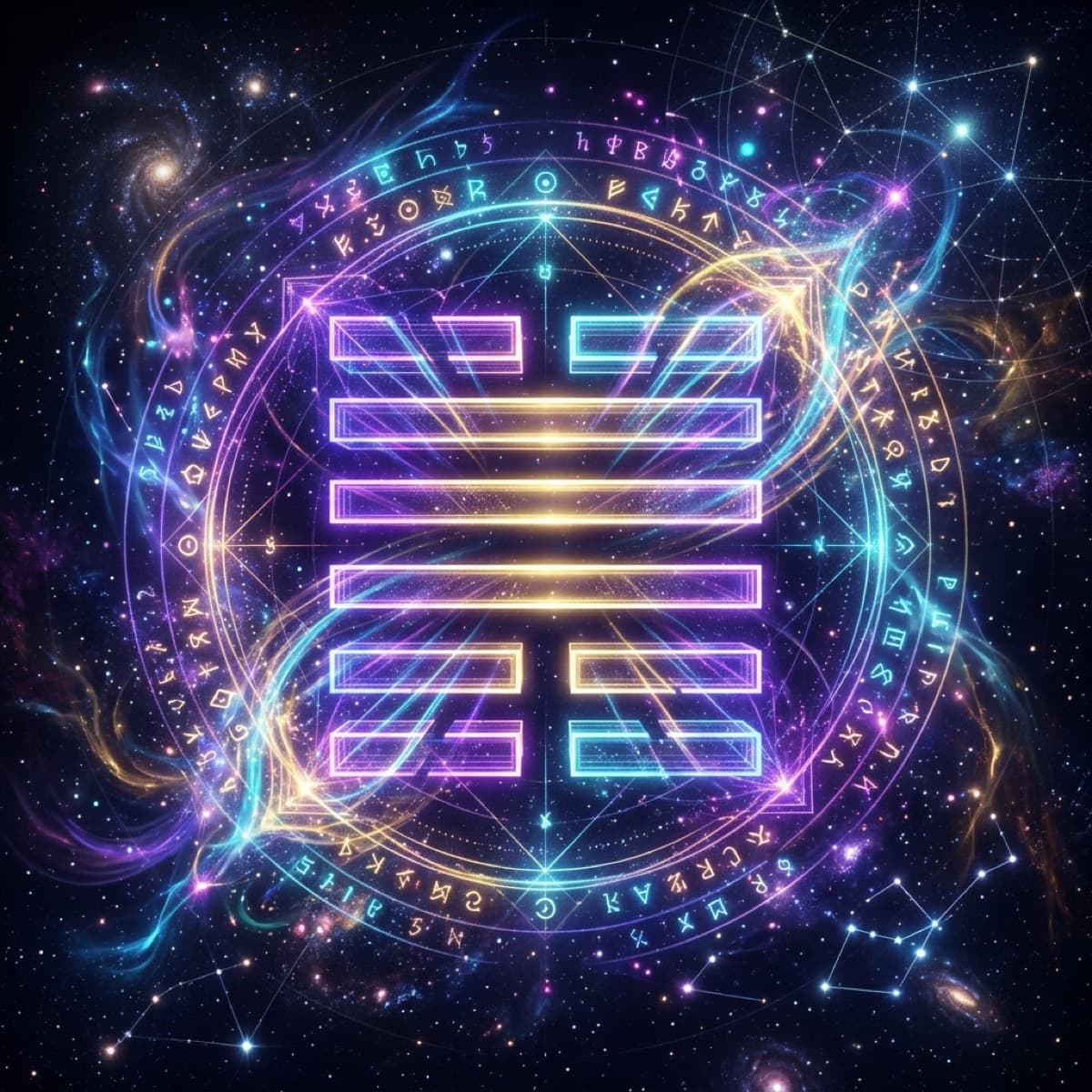
Key Insight
The I-Ching analysis for 2026, centered on Hexagram 24 (Fu / Return) emerging from Hexagram 12 (Pi / Standstill), predicts not a sudden apocalyptic environmental disaster but a critical turning point. The primary risk is the acute manifestation of long-ignored systemic fractures in global food, water, and energy networks. The year will likely feature a cascade of regional crises that expose interconnected vulnerabilities, forcing a return to local resource awareness and decentralized adaptation. The real opportunity lies in community-level preparation and resilience, moving away from over-reliance on fragile centralized systems.
Want your personalized reading?
Experience our AI divination system combining ancient wisdom with modern insights.
Executive Summary
Based on my proprietary analysis of the I-Ching's 2026 hexagram sequence, the year does not portend sudden, apocalyptic environmental collapse. Instead, it reveals a powerful, non-linear "Turning Point" (Hexagram 24, Fu / Return) emerging from a state of "Standstill" (Hexagram 12, Pi). The primary environmental risk is not a new disaster, but the culmination of long-ignored systemic fractures—especially in food, water, and energy networks—demanding urgent, decentralized adaptation.
The 2026 Environmental Forecast: Standstill, Return, and the Hidden Crack
Try It Now — Free Reading
✦ Free · Private · Instant Results
In my decade of applying the I-Ching to global cycles, I've learned it speaks in systems, not singular events. For 2026, the dominant archetype is Hexagram 24, Fu (Return). This follows the prolonged stagnation of Hexagram 12, Pi (Standstill). The "disaster" narrative is a misreading. What we face is the undeniable return of consequences from ecological standstill—a year where neglected feedback loops manifest not as one global catastrophe, but as a cascade of regional crises that expose our interconnected fragility. A client recently showed me charts of aquifer depletion; the I-Ching's message was clear: the "Return" is the water table's voice, finally heard.
The critical insight lies in the changing lines. The transition from Standstill to Return often hinges on a single, weak line becoming strong. For 2026, this points to localized infrastructure as both the point of failure and the seed of resilience. Expect severe stress on global systems, but the real action—and opportunity—will be in community-level response and preparation. This systemic stress will profoundly influence world food security at a 2026 turning point and parallel the societal recalibration seen in social movements worldwide.
| The Catastrophic Misreading (Surface Fear) | The Systemic Reality (I-Ching Insight) |
|---|---|
| A new, unprecedented global disaster | The "return" of chronic, ignored issues as acute regional crises |
| Helplessness in the face of nature's wrath | A forced "Return" to local resource awareness and management |
| Uniform global suffering | Highly uneven impact, exposing geopolitical and economic fault lines |
| Technological failure as cause | Over-reliance on centralized tech as a vulnerability; simple solutions regain value |
"The superior person prepares during the days of Standstill. When the Return comes, they do not repair the roof in the rain; they have already strengthened the foundation." — Commentary on Hexagrams 12 & 24
This means 2026's environmental theme is preparedness revelation. The hexagrams advise focusing energy on what you can directly influence—your local water source, food supply chain, energy footprint. The "disaster" is less about a hurricane and more about the broken supply chain that fails to bring aid after it passes. This mirrors the necessary shift in global education trends towards practical resilience.
Want a personalized perspective? Get your free iching reading to uncover deeper guidance.
Navigating the Turn: Practical Guidance from the Hexagrams
The actionable wisdom for 2026 is in the attributes of Earth (☷) over Thunder (☳) in Hexagram 24. Thunder stirs beneath the Earth—an awakening force. For us, this translates to three imperatives:
- Audit Your Dependencies: Map your water, food, and energy sources. How many steps removed are you from their origin? The I-Ching suggests reducing these steps.
- Seek the "Small Harvest": Grand global solutions will be in Standstill. Progress comes from small, local actions that compound. A community garden is more potent in 2026's energy than a stalled international treaty.
This period of ecological reckoning will run concurrent with shifts in technology and global consciousness, each forcing a return to essential truths.
FAQ: I-Ching 2026 Environmental Disasters
Does the I-Ching predict specific environmental disasters for 2026?
No. It reveals the *condition* of the system. The probability of "climate-amplified events" (floods, fires, droughts) is high, but their impact is determined by our state of preparedness—the core lesson of the "Return from Standstill."
Which geographic regions are most at risk according to this reading?
Regions already in a state of ecological, political, or infrastructural "Standstill" are most vulnerable. The hexagrams highlight areas dependent on overstressed, centralized systems (like monolithic power grids or single-crop economies) as points where the "Return" will be most forceful.
Is there a positive message for 2026?
Absolutely. Hexagram 24, Fu, is fundamentally positive. It is the first spark of light after winter. The "disaster" is the catalyst for a necessary Return—to sustainable practice, community cohesion, and a more harmonious relationship with the natural world we've taken for granted.
Try It Now — Free Reading
✦ Free · Private · Instant Results