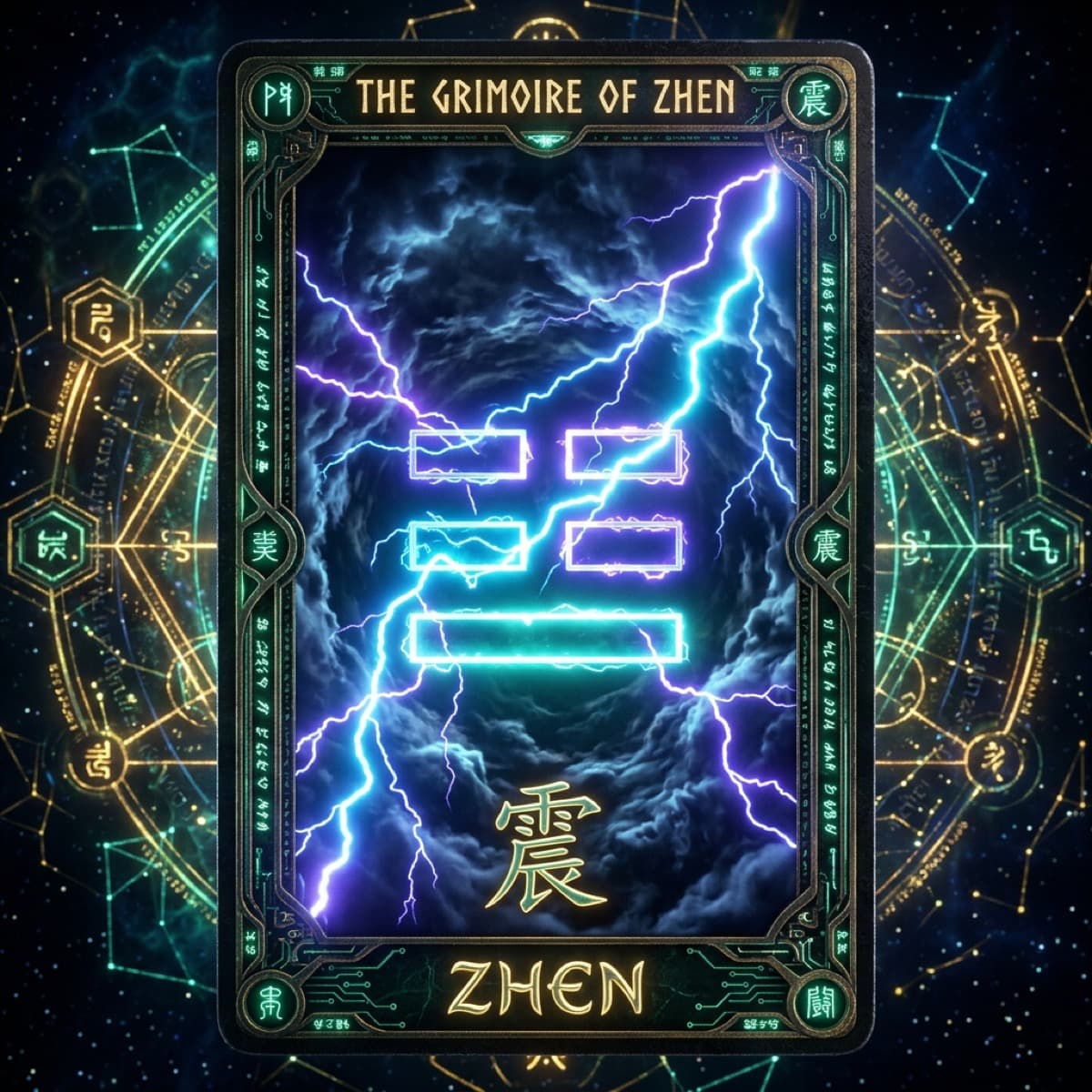
Key Insight
The I-Ching (Yijing) offers caregivers a profound framework to transform burnout from a personal failure into a manageable imbalance. It provides symbolic guidance, such as interpreting exhaustion as Hexagram 47 (K'un) and prescribing a shift to Hexagram 40 (Deliverance) through actionable steps like delegating tasks. The system reframes the role from an endless source of energy to a well's keeper, emphasizing structured support, mandatory personal boundaries, and rituals aligned with natural cycles to restore harmony and resilience.
Want your personalized reading?
Experience our AI divination system combining ancient wisdom with modern insights.
Executive Summary: The I-Ching (Yijing) reframes caregiver burnout not as failure, but as an imbalance in the hexagram of your life. It offers specific, non-linear strategies—from the "Joyous Lake" of self-care to the "Gentle Wind" of delegation—to restore harmony. This ancient system provides symbolic clarity, moving you from crisis management to wise stewardship.
The Caregiver's Hexagram: Crisis as an Unstable Trigram
In my decade of guiding clients through life's crucibles, I have seen no role more prone to the hexagram of Exhaustion (47. K'un) than that of the family caregiver. You are the Mountain (艮 Gèn), steadfast and unmoving, supporting the Water (坎 Kǎn) of your parent's declining health. But when Water floods the Mountain, erosion and collapse are inevitable. The crisis is not the illness itself, but the structural instability of this arrangement. The I-Ching does not offer platitudes; it provides a dynamic map. A recent client, drowning in the 24/7 care of her father with dementia, drew Hexagram 29, The Abysmal Water, doubled. The text warned, "Water flows on without interruption." My interpretation was blunt: her current path was an endless, draining loop. The changing line to Hexagram 48, The Well, revealed the pivot: she was not the source of water, but the keeper of the well. Her duty was to maintain the structure so others could also draw from it. This meant implementing a schedule—a radical act of self-preservation.
| Caregiver State (Hexagram) | I-Ching Prescription (Changing To) | Practical Action |
|---|---|---|
| Exhaustion (47): Feeling trapped, resources depleted. | Deliverance (40): The thunderstorm clears. | Identify ONE concrete task to outsource (e.g., meal delivery, a respite sitter) this week. |
| Oppression (47) with changing lines to Revolution (49): Resentment boiling over. | The Taming Power of the Small (9): Gentle, consistent discipline. | Institute a non-negotiable 15-minute daily boundary (a walk, locked-door meditation) to tame internal chaos. |
"The superior man rallies his friends for support, as leather binds together in strength." – Hexagram 13, Fellowship with Men. This is not a suggestion; it is a command from the oracle. Your isolation is geometrically incorrect.
Beyond Burnout: Rituals of Replenishment & The Well
Try It Now — Free Reading
✦ Free · Private · Instant Results
The modern "self-care" mantra often fails because it feels like another task on your list. The I-Ching frames it as aligning with natural law. Hexagram 58, The Joyous Lake, is crucial. A lake must be fed by springs and streams to remain joyous, not drained continuously. Your rituals are those tributaries.
- The 3-Minute Divination: Before the day's chaos, ask: "What quality do I need to cultivate today?" Cast a single hexagram using simple methods like DIY I Ching Paper Slips: A Free & Intentional Coin Substitute for 2026. Let its image (e.g., "Keeping Still" or "The Clinging") be your touchstone.
- The Wind Trigram (Xùn): This represents penetration and gentle influence. Apply it to bureaucracy. Be the persistent, gentle wind that navigates healthcare systems, eroding resistance through calm, repeated contact.
Want a personalized perspective? Get your free iching reading to uncover deeper guidance.
FAQ: I-Ching for the Weary Caregiver
Q: I'm too tired for a complex ritual. Can the I-Ching still help?
A: Absolutely. Exhaustion is its own hexagram. Merely holding the coins or slips with your question ("How can I find a moment of peace?") is a ritual of intention. The act of asking shifts your consciousness from victim to active seeker.
Q: My siblings won't help. What hexagram addresses family conflict?
A: Hexagram 6, Conflict, directly. It advises not to force resolution but to "seek arbitration." The I-Ching often suggests a third-party mediator—a care manager, therapist, or clergy—to break the stagnant dynamic. Your role is to initiate that call, then embody Hexagram 37, The Family, by clearly defining roles, however imperfect.
Q: This feels like a spiritual crisis. I'm angry at fate.
A: This is profound and valid. Your journey shares the existential terrain of those facing a I-Ching for Chronic Pain: Finding Clarity for Surgery Decisions Beyond Fear or a I-Ching Wisdom for Teachers Leaving the Profession: Navigating Midlife Crisis. The I-Ching does not promise fairness. It teaches resilience through change. Your anger is the fire that can purify, if you channel it into creating new structures of care instead of burning down your own spirit.
Try It Now — Free Reading
✦ Free · Private · Instant Results